
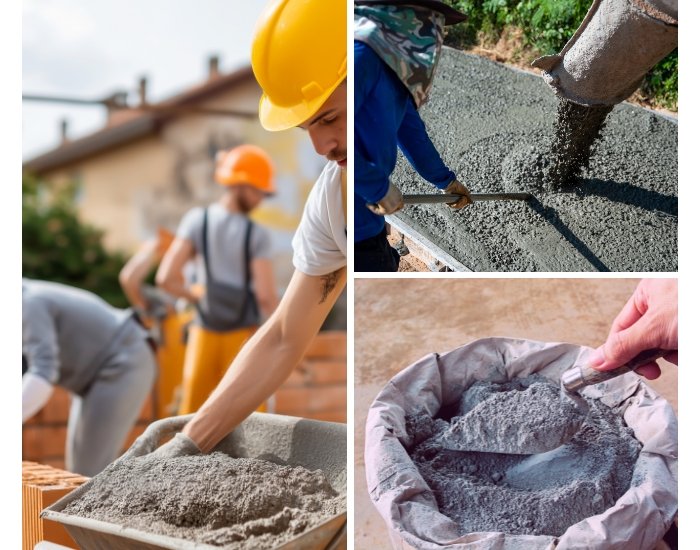
When planning any construction or home improvement project, understanding the concrete and cement difference is crucial. Many people mistakenly use the terms interchangeably, but cement and concrete serve very different purposes. While cement acts as a binding material, concrete is a composite mixture designed for strength, durability, and structural integrity.
Homeowners and contractors in Texas, including Katy, Cypress, and Spring, frequently encounter projects where selecting the correct material affects both the performance and longevity of the surface. From driveways to patios and commercial slabs, knowing the difference ensures that your investment withstands the unique soil, heat, and moisture conditions in the region.
This guide explains the concrete and cement difference, explores their uses, composition, and common misconceptions, and offers tips to ensure your project is successful.
Table of Contents
- Defining Cement and Its Purpose
- What Concrete Is and How It Works
- Key Differences Between Concrete and Cement
- Common Applications of Cement vs Concrete
- Composition and Mixing Techniques
- Cost, Availability, and Practical Considerations
- Misconceptions About Concrete and Cement
- FAQs
- Final Thoughts
1. Defining Cement and Its Purpose
Cement is a finely ground powder made from materials such as limestone, clay, shells, and silica. Its primary function is as a binder, meaning it holds other materials together when mixed with water. This process, called hydration, transforms the powder into a hard, solid substance.
Alone, cement is rarely used for large structural projects because it does not provide sufficient bulk or strength to support heavy loads. Instead, it is typically mixed with sand, gravel, or crushed stone to form concrete. Cement also appears in mortar for bricklaying or plaster for wall finishes. Understanding cement’s role as the “glue” in construction is essential for homeowners who want long-lasting, durable surfaces.
2. What Concrete Is and How It Works
Concrete is a composite material composed of cement, water, sand, and coarse aggregates like gravel or crushed stone. Cement acts as the binding agent, while the aggregates give the mixture bulk, strength, and stability. Once poured and cured, concrete forms a durable, load-bearing surface capable of withstanding heavy use, environmental stress, and the effects of Texas soil conditions.
Concrete is widely used for driveways, patios, sidewalks, foundations, and commercial flooring because of its compressive strength and long-term performance. Unlike cement alone, concrete is engineered to resist cracking, erosion, and settlement when properly reinforced and maintained.
3. Key Differences Between Concrete and Cement
Understanding the concrete and cement difference can prevent costly mistakes in construction and home improvement projects. Key distinctions include:
- Composition: Cement is a single material, while concrete is a mixture of cement, water, sand, and aggregates.
- Function: Cement binds, whereas concrete is designed for structural strength and durability.
- Strength: Concrete is stronger and load-bearing due to its mixture of aggregates.
- Usage: Cement is used in small projects, mortar, plaster, or as a binding ingredient, while concrete is used for slabs, foundations, driveways, and commercial flooring.
- Longevity: Concrete can last decades with proper installation and maintenance, while cement alone cannot withstand heavy use.
Recognizing these differences ensures homeowners choose the right material for their project’s structural and aesthetic needs.
4. Common Applications of Cement vs Concrete
Both cement and concrete have specialized applications, which homeowners and contractors should understand:
- Concrete Applications: Driveways, garage slabs, patios, sidewalks, foundations, commercial slabs, retaining walls, and pool decks.
- Cement Applications: Mortar for bricklaying, plaster, stucco, patching small cracks, and serving as the binder in concrete mixtures.
For example, when installing a new driveway in Katy, TX, concrete is the recommended material because it provides strength and durability for vehicle loads, while cement may be used to fill minor cracks or create decorative finishes. Recognizing the correct application prevents project failures and unnecessary costs.
5. Composition and Mixing Techniques
The concrete and cement difference also extends to how each material is mixed and used:
- Cement Mixing: Cement is combined with water to form a paste. Its role is purely as a binder, holding other materials together when used in mortar or as part of a concrete mix.
- Concrete Mixing: Concrete requires precise ratios of cement, water, sand, and coarse aggregates. Additives, such as air-entraining agents, fibers, or accelerators, can be included to enhance performance, especially in hot Texas climates or on expansive soil. Proper mixing ensures strength, durability, and uniform consistency across the slab.
Professional contractors, like Active Concrete Works, adjust mixes according to the project’s needs to achieve the desired strength and long-term performance.
6. Cost, Availability, and Practical Considerations
Cement is generally less expensive per unit than concrete because it is a single material. However, concrete provides the necessary strength and structural support for slabs, driveways, and foundations. Ordering the correct quantity of concrete is critical to avoid shortages or waste. Contractors calculate cubic yards based on project dimensions, slab thickness, soil conditions, and anticipated waste to ensure an accurate order.
Choosing the correct material and ordering the right amount saves money, prevents project delays, and ensures a safe, long-lasting structure. Understanding the concrete and cement difference is key to making informed financial and structural decisions.
7. Misconceptions About Concrete and Cement
Many people confuse cement with concrete, assuming the two are interchangeable. While cement is a vital component of concrete, using cement alone for slabs, driveways, or foundations is insufficient and can lead to cracks, uneven surfaces, or premature failure. Another common misconception is that increasing the amount of cement in a concrete mix automatically improves strength. In reality, proper aggregate ratios, water content, and curing methods are far more critical to durability than simply adding more cement. Recognizing these misconceptions helps homeowners avoid costly mistakes and ensures the longevity of their concrete projects.
8. FAQs
1. What is the concrete and cement difference in simple terms?
Cement is the binding ingredient, while concrete is a mixture of cement, water, sand, and aggregates designed for structural strength.
2. Can I use cement alone for a driveway in Cypress, TX?
No, cement alone cannot support vehicle loads; concrete is necessary for durable, load-bearing surfaces.
3. How does concrete handle Texas soil and climate conditions?
Concrete is durable, but proper mix design, reinforcement, and slab leveling are essential to withstand expansive soil and heat fluctuations.
4. Is concrete more expensive than cement?
Yes, because it includes multiple materials and provides structural integrity for slabs and driveways.
5. Do contractors offer both concrete and cement services?
Yes, experienced contractors like Active Concrete Works provide concrete installation, slab leveling, and cement-based repairs or decorative finishes.
9. Final Thoughts
Understanding the concrete and cement difference is essential for homeowners, builders, and contractors planning construction projects. While cement acts as a binder, concrete provides the structural strength and durability necessary for long-lasting driveways, patios, foundations, and commercial slabs. Selecting the right material, using proper mix ratios, and employing experienced contractors ensures a safe, durable, and visually appealing result.
For property owners in Katy, Cypress, and Spring, TX, Active Concrete Works offers professional guidance, concrete installation, slab leveling, and structural repair services. Contact them today to ensure your project is executed correctly and built to last.